


Best Commercial Kitchen Hood Filters for Heavy Grease
For a high-grease kitchen, the best hood filter is a UL 1046-listed stainless steel baffle filter. These listed filters capture more grease, resist heat and fire better than aluminum mesh, hold up to repeated degreasing, and are the type your fire marshal expects to see. If your line runs fryers, charbroilers, woks, or a solid-fuel grill, a baffle filter is effectively the only code-acceptable choice. Below is how the common filter types compare, what UL 1046 means, and why the filter is only the first line of defense against the grease that fuels a kitchen fire.
How Hood Filter Types Compare
Every grease filter does the same basic job. It sits in the hood and pulls grease out of the rising exhaust before that grease travels into your ductwork. Where they differ is how well they do it, how they behave in a fire, and how long they last. Here are the types you will run into:
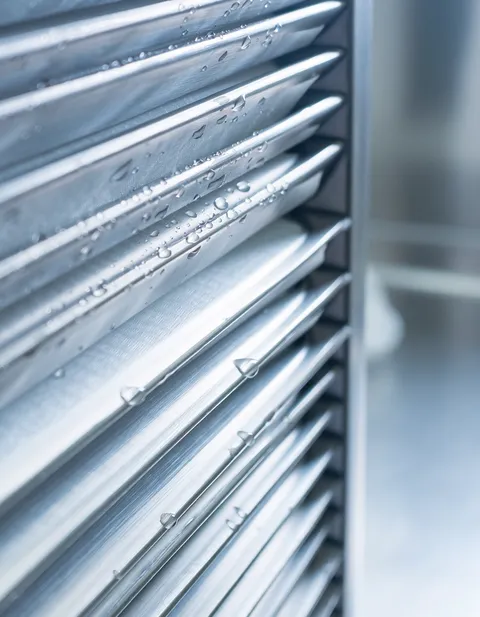
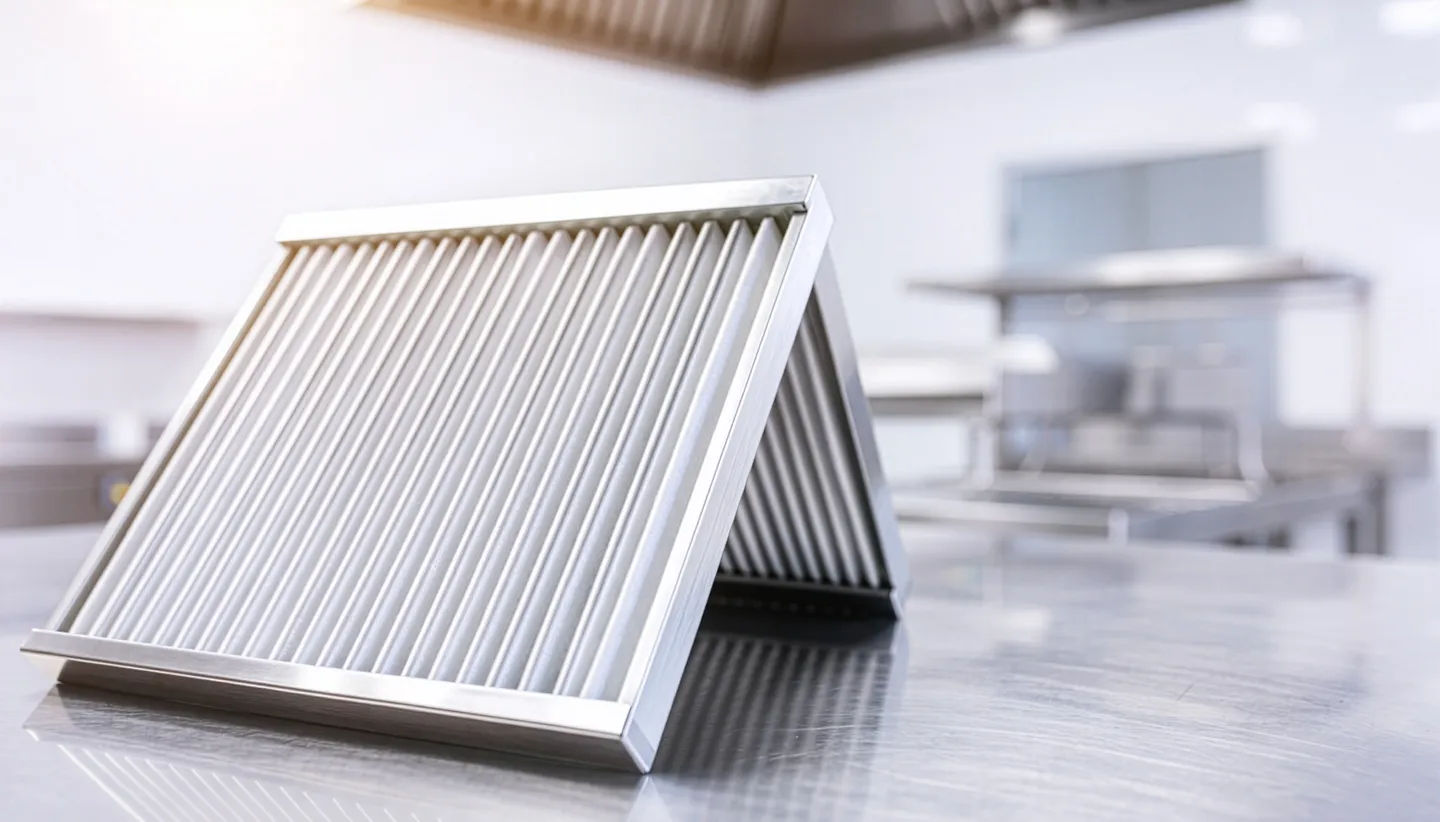
- Stainless steel baffle filters: interlocking S-shaped metal blades that force the exhaust to change direction sharply. Grease is heavier than air, so it slams into the baffles and drains down into a trough instead of riding into the duct. Stainless resists corrosion from salt air and repeated degreasing, and the solid metal construction will not feed a flame. This is the heavy-grease workhorse.
- Aluminum baffle filters: the same baffle design at a lower price. They capture grease well, but aluminum is softer, corrodes faster in humid coastal air, and warps under sustained high heat. Acceptable for moderate-volume kitchens. Not ideal where the line runs hot all day.
- Aluminum or galvanized mesh filters: layered woven screens. They clog quickly with heavy grease and are far harder to clean back to bare metal. Worse, mesh can let flame pass through and even carry fire up into the duct. They are a poor fit for any high-grease operation.
Important Note: a mesh filter that looks clean on the surface is often still saturated deep in the weave. The metal mesh baffle design is easier to verify. Hold a properly cleaned baffle up to the light and you can see light pass through the drainage channels. That visual check is part of why they are the standard for serious cooking lines.
Why UL 1046 Listing Matters
UL 1046 is the safety listing for grease filters used in commercial cooking exhaust. NFPA 96, the national fire code your kitchen is inspected against, requires that the filters in your hood be a listed type. Using a non-listed filter, or running a damaged or warped one, is both a code issue and a real loss of grease-capture efficiency. A listed baffle filter has been tested to perform and to resist fire the way the code assumes it will.
In practice this means two things for your kitchen. First, when you replace filters, you replace them with UL 1046-listed baffle filters sized to your hood, not whatever fits. Second, your filters have to be intact. A bent baffle, a missing handle, or a corroded frame that no longer seats flush lets grease bypass the filter entirely. Our commercial kitchen hood cleaning service checks that your filters are listed, intact, and securely mounted on every visit.
The Filter Is Only the First Line of Defense
Even the best stainless filter catches only a share of the grease your kitchen produces. The rest rides past into the plenum, the ductwork, and the rooftop fan. That hidden grease is where most exhaust fires actually start. A clean, high-quality filter slows how fast grease reaches those concealed runs, but it does not replace cleaning them. The two work together:
- Filters reduce the grease load: clean, listed filters keep airflow strong and capture grease at the source, so less of it travels downstream between full cleanings.
- Filter maintenance is the daily habit: heavy-grease kitchens soak and scrub their baffle filters often, frequently weekly. That is labor your staff either absorbs or hands off to a filter-exchange program.
- The full system still needs a bare-metal cleaning: NFPA 96 requires certified technicians to scrape and wash the hood, plenum, ducts, and fan down to bare metal on a schedule set by your cooking volume. No filter prevents that.
Why Heavy Grease Builds Faster on the Treasure Coast
Filter choice matters more here than in a drier climate. The long, humid summers and heavy seasonal rain around Port St. Lucie keep grease tacky and slow to dry, so it loads up on filters and surfaces faster. The salt air off the Indian River Lagoon also corrodes aluminum hardware and rooftop fan housings. That is one more reason stainless steel earns its cost in coastal kitchens. A filter that resists both grease saturation and corrosion lasts longer and protects your system better.
If you are not sure whether your current filters are UL 1046-listed, the right type for your grease load, or simply due for replacement, we can tell you. Get in touch for a free assessment and we will look at your filters, your hood, and how you cook. Then we recommend the right setup, with no upsell to filters you do not need.
More Hood Cleaning Guides
- How to Safely Clean Commercial Hood Filters Yourself
- What Happens During a Professional Commercial Hood Cleaning?
- Commercial Kitchen Odor Control & Exhaust Cleaning | PSL
- All hood cleaning resources