


How to Safely Clean Commercial Hood Filters Yourself
You can clean your own baffle filters, and for daily and weekly upkeep you should. The safe method runs in order. Let the filters cool, remove them, soak them in a hot degreasing solution, scrub the baked-on grease loose, rinse until light passes through the baffles, and let them dry before reinstalling. That is within reach for your staff. The how-to below also makes plain how much labor it takes when you do it right, several times a week. That is exactly where many kitchens decide to hand the job off. First, the safe steps.
Before You Start: Safety First
Filter cleaning involves hot metal and a caustic degreaser, so set up before you touch anything:
- Let the cooking line and filters cool completely. Pulling a hot baffle filter risks a burn and warps the metal.
- Wear chemical-resistant gloves and eye protection. Commercial degreasers are alkaline and will irritate skin and eyes.
- Work in a ventilated area and keep the degreaser off food-contact surfaces.
- Never pour grease or grease-laden wash water down a drain. It solidifies and clogs your plumbing. Collect and dispose of it properly.
Step by Step: Cleaning Baffle Filters
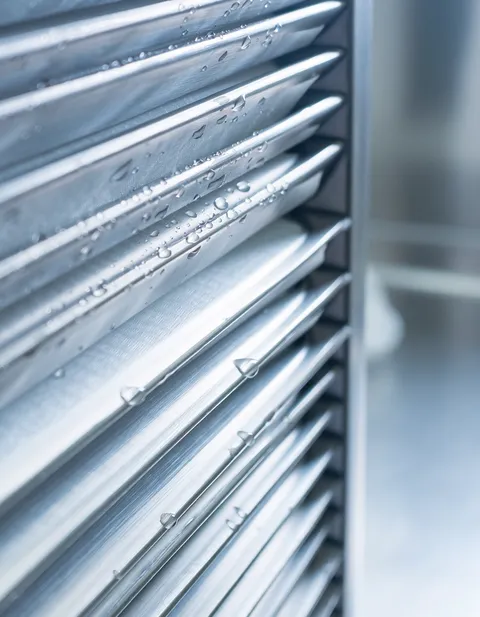
Done correctly, the goal is bare metal. The filter should be clean enough that you can see light pass straight through the baffle channels. Here is the full process:
- Remove the filters: lift each baffle filter out by its handle. Note how they seat so they go back the same way, channels pointing down to drain.
- Scrape off the heavy grease: knock the thick surface grease off with a scraper before soaking, so your solution is not overwhelmed on contact.
- Soak in hot degreasing solution: submerge the filters in a sink or tank of hot water and a commercial alkaline degreaser. Heavy buildup needs a real dwell time, often 20 to 30 minutes or more.
- Scrub every channel: work a stiff brush into the baffles. The grease lives down inside the S-curves where a quick wipe never reaches. This is the slow part.
- Rinse down to the metal: rinse with hot water and hold the filter up to the light. If light does not pass cleanly through the channels, it is not done. Soak and scrub again.
- Dry and reinstall: let filters drain and dry, then seat them back in the hood, intact and secure. A warped or loose filter lets grease bypass it entirely.
Important Note: this handles only the filters. It does not touch the grease that has already ridden past them into the plenum, the ductwork, and the rooftop fan. Those hidden runs are where most exhaust fires actually start. Cleaning your filters is good practice, but it is not a substitute for a full system cleaning.
How Much Labor This Really Is
On paper it is six steps. In a real high-grease kitchen it adds up fast. Be clear-eyed about the cost before you commit your staff to it:
- It is frequent: a busy fryer or charbroiler line often needs filters cleaned weekly or more, not once in a while. That is a recurring block of labor every single week.
- It is slow and physical: soaking, scraping, and scrubbing baked-on grease out of every baffle channel until light passes through is genuinely hard work, and rushing it just leaves grease behind.
- It ties up your sink and your people: the job occupies a three-compartment sink or soak tank and a staff member who is not prepping, cooking, or serving while they do it.
- It is easy to do halfway: a filter wiped to look clean but still saturated deep in the channels chokes airflow and lets grease through. Half-cleaned filters are common, and they quietly raise your fire load.
When a Filter Exchange Makes More Sense
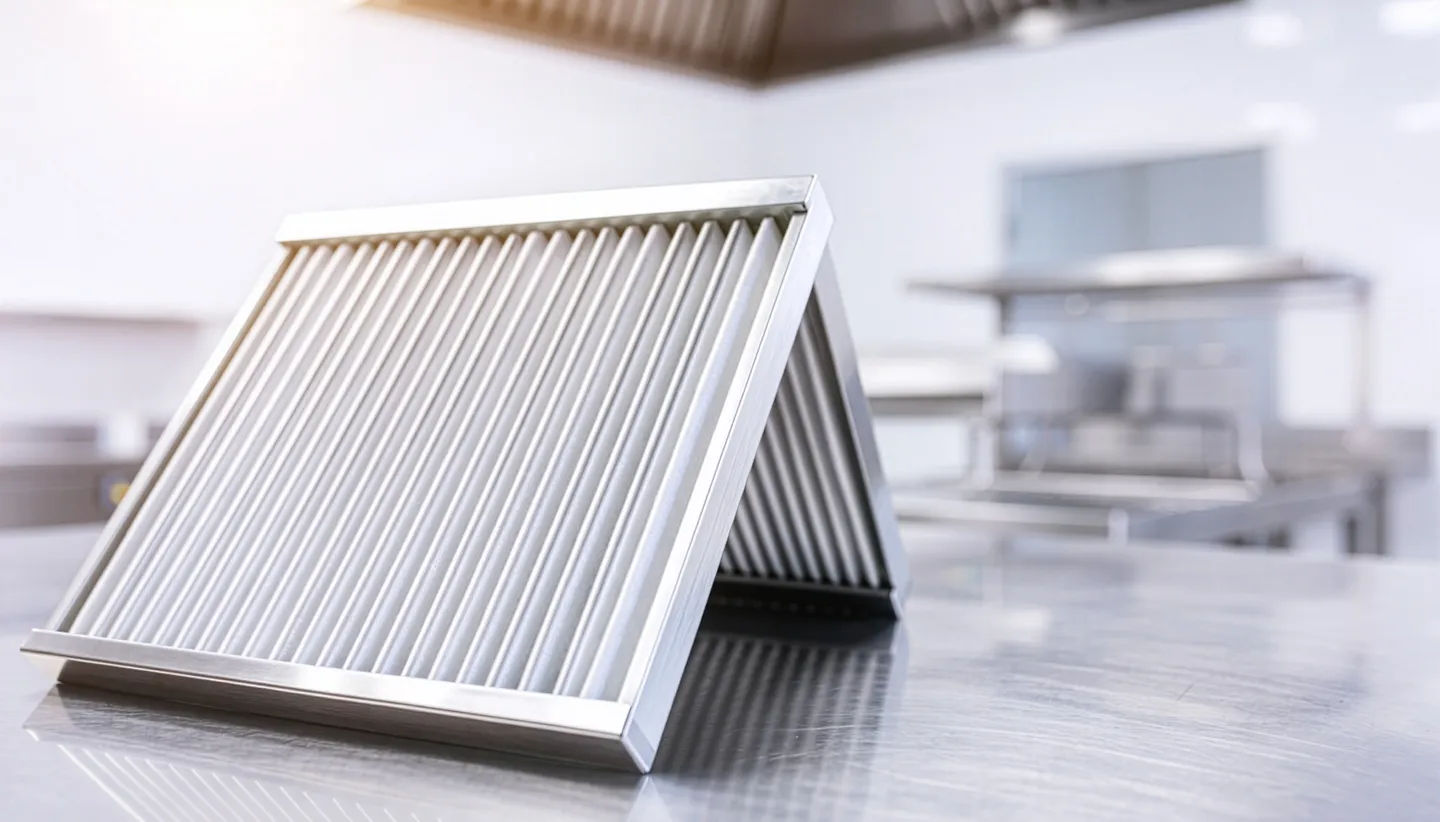
There is a middle path between doing it all yourself and ignoring it. It is a filter-exchange program. On a set schedule, we drop off clean UL 1046-listed baffle filters and take your grease-loaded ones away to be degreased to bare metal off-site. Your staff swaps them in minutes instead of spending hours at the sink, your filters are always properly cleaned and verified, and your three-compartment sink stays free for kitchen work. Same outcome, clean and code-correct filters, without the recurring labor drain.
Keeping clean filters in the hood also protects the rest of your system. It keeps airflow strong and slows how fast grease reaches the ducts and fan between full cleanings. Those still need a certified, bare-metal commercial kitchen hood cleaning on the schedule your cooking volume sets. The filter work, whether you do it or we do, complements that cleaning rather than replacing it.
If filter cleaning has become a weekly headache for your crew, we can take it off their plate. Get in touch for a free assessment and we will look at how you cook, how many filters you run, and whether an exchange schedule would actually save you time and money. We will tell you if you are better off keeping it in-house.
More Hood Cleaning Guides
- What Happens During a Professional Commercial Hood Cleaning?
- Commercial Kitchen Odor Control & Exhaust Cleaning | PSL
- How Much Does Commercial Hood Cleaning Cost in Port St. Lucie?
- All hood cleaning resources