

Commercial Hood Cleaning in Fort Pierce, FL
Fort Pierce's signature dining sits right on the City Marina and the Fort Pierce Inlet. The waterfront seafood houses there all run rooftop exhaust fans that take direct, undiluted salt spray off the open inlet. That salt air corrodes fan housings, fasteners, and bearings faster than anywhere inland. The high-volume fried-seafood menus these waterfront houses run lay down grease fast and keep it tacky in Treasure Coast humidity. Coastal corrosion plus a heavy grease load is what sets the marina district apart. We clean the full exhaust system to the national fire code for kitchen exhaust and check the rooftop fan for the salt-air corrosion and storm wear that come with cooking on the inlet.
Why Fort Pierce Kitchens Need a Local Approach
A hood cleaning on the inlet is not the same job it would be inland. The working-waterfront setting and the storm exposure add failure points a generic, grease-only cleaning skips:
- Direct inlet salt spray on the fan: undiluted salt air off the open Fort Pierce Inlet eats at fan housings, fasteners, and bearings. We degrease the fan and check it for corrosion, belt wear, and balance too.
- Heavy fried-seafood grease loads: fish 'n' chips, fried baskets, and oyster bars build grease fast, and Treasure Coast humidity keeps it tacky. That pushes these marina kitchens toward shorter cleaning intervals.
- Inlet-front storm exposure: the 2004 hurricanes Frances and Jeanne wrecked the City Marina, and an EF3 tornado from Hurricane Milton struck in October 2024. Rooftop fans and duct penetrations are real pre-season liabilities worth inspecting.
- Aging downtown building stock: historic-downtown and Lincoln Park kitchens often mean tight roof access, older ductwork, and legacy hood installs that complicate full code-compliant access and bare-metal cleaning.
- One countywide inspector: the St. Lucie County Fire District is a single countywide authority enforcing the fire code, the same standard PSL kitchens face, with a dated certificate posted on the hood.
What an NFPA 96 Hood Cleaning Covers
NFPA 96 is the national fire-safety standard for commercial kitchen exhaust. It requires grease to be removed down to bare metal across the entire system, including the parts you can't see. Our commercial kitchen hood cleaning reaches every section grease can travel through:
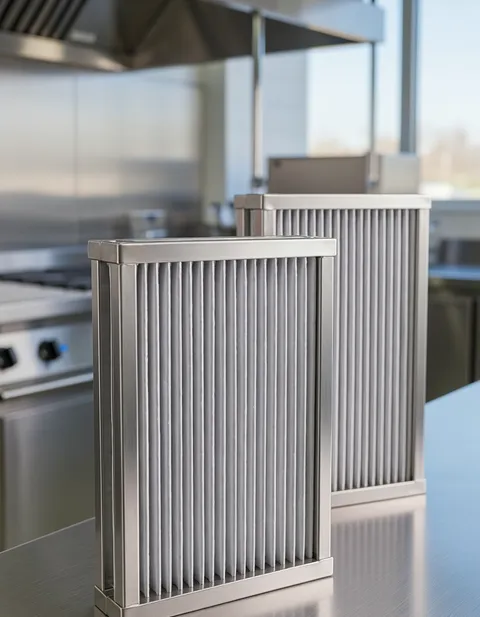
- Hood canopy & baffle filters: scraped and hot-washed, with the filters pulled and soaked in degreaser.
- Plenum & access panels: the chamber behind the filters where grease pools, opened and cleaned out, not surface-sprayed.
- Vertical & horizontal ductwork: the hidden run between the hood and the fan where most grease fires actually start, and where older downtown ducts may need added access.
- Rooftop exhaust fan: hinged back, degreased, and checked for belt wear, salt-air corrosion, and proper airflow.
- Rooftop grease containment: grease boxes and pads cleaned or replaced so runoff never reaches your roof membrane.
Our Cleaning Process, Step by Step
- Inspect the full system from hood to fan and measure grease depth against the code's bare-metal thresholds with a grease gauge.
- Cover and protect your cooking equipment, then remove the baffle filters to soak in degreasing solution.
- Scrape and hot-wash the hood canopy interior and underside, working top-down so grease drips out, not onto your line.
- Open the plenum and access panels and clean the ductwork along its full length, adding access on sealed older runs where needed.
- Hinge open the rooftop fan, degrease the housing and blades, and check the belt, balance, and salt-air corrosion.
- Clean or replace rooftop grease containment, then reinstall the filters and wipe down the exterior.
- Document the work and apply a dated compliance service sticker for your inspector.
Serving Kitchens Across Fort Pierce
Fort Pierce's foodservice scene skews toward independent waterfront seafood houses rather than I-95 chains, anchored by the marina and the historic downtown. We clean hoods across the city's dining districts:
- City Marina & Marina Square: the inlet-front cluster of waterfront seafood restaurants
- Historic Downtown: independent kitchens along N. Indian River Dr. and near the Sunrise Theatre
- Lincoln Park (Avenue D): neighborhood kitchens in the historic district
- North Causeway / Hutchinson Island approach: waterfront and approach-road operators
Downtown food events load nearby kitchens harder than a normal week. The Saturday Farmers' Market draws 70-plus vendors, the monthly Friday Fest fills Marina Square, and the Sunrise Theatre brings event crowds. That is another reason to time cleanings around how your volume actually moves through the year.
How Often Your Kitchen Should Be Cleaned
The fire code sets your cleaning frequency by how hard you cook. The St. Lucie County Fire District can require more often based on what an inspection finds:
- Monthly: solid-fuel cooking such as wood and charcoal, plus high-volume wok lines
- Quarterly: high-volume frying and grilling, busy seafood houses, and 24-hour kitchens
- Semi-annually: moderate-volume sit-down restaurants
- Annually: low-volume kitchens like churches, day cares, and seasonal venues
What You Get After Every Visit
- A bare-metal clean: verified deep at the access panels, where grease hides.
- A written report with photos: before-and-after proof for your records and your insurer.
- A dated compliance sticker: the tag the fire district's inspector looks for, signed and dated.
Kitchen exhaust systems are behind roughly a third of all restaurant fires. Nearly all of them are preventable with regular cleaning, and a fried-seafood line on the inlet builds the grease that fuels them fast. Most code-compliant cleanings start around a $400 to $600 minimum and scale with the size of your system, how heavy the grease load is, and how easy the fan is to reach. Request a free quote and we will give you a clear breakdown and a cleaning schedule built around how you actually cook here in Fort Pierce.
Request a Free Quote